August 18th 2025 Healing the Land: How Phytoremediation Uses Plants to Detoxify Polluted Soil

Geology—rock and stone, the very skeleton of the land we live on—has always inspired me. Beneath our feet lies not only a foundation but also a record of history: layers formed over millions of years, reshaped by human activity through mining and quarrying. When we bring what is buried to the surface, we often leave scars on the land. My work explores this tension—between what is hidden and revealed, stable and disrupted—and how these ideas can be expressed visually through mixed media while learning about abandoned mine remediation

My two artist residencies in Iceland were pivotal in connecting my practice to landscape in a deeper way. They also introduced me to biodesign, specifically the process of phytoremediation: using plants to detoxify polluted soil. This method has growing importance in the rehabilitation of abandoned mines and quarries worldwide.

I have explored several sites marked by extraction: silver mines in Nevada (USA), left as vast open pits on what are now government-issued Indian reservations; a lead mine in the Mendips (UK); a deserted copper mine in southern Ireland; and countless quarries that remain as empty voids, visible even through satellite images online. These places are not just industrial remnants—they also carry environmental legacies in the form of toxic tailings, where heavy metals such as lead, arsenic, and cadmium persist in the soil long after mining has ended.

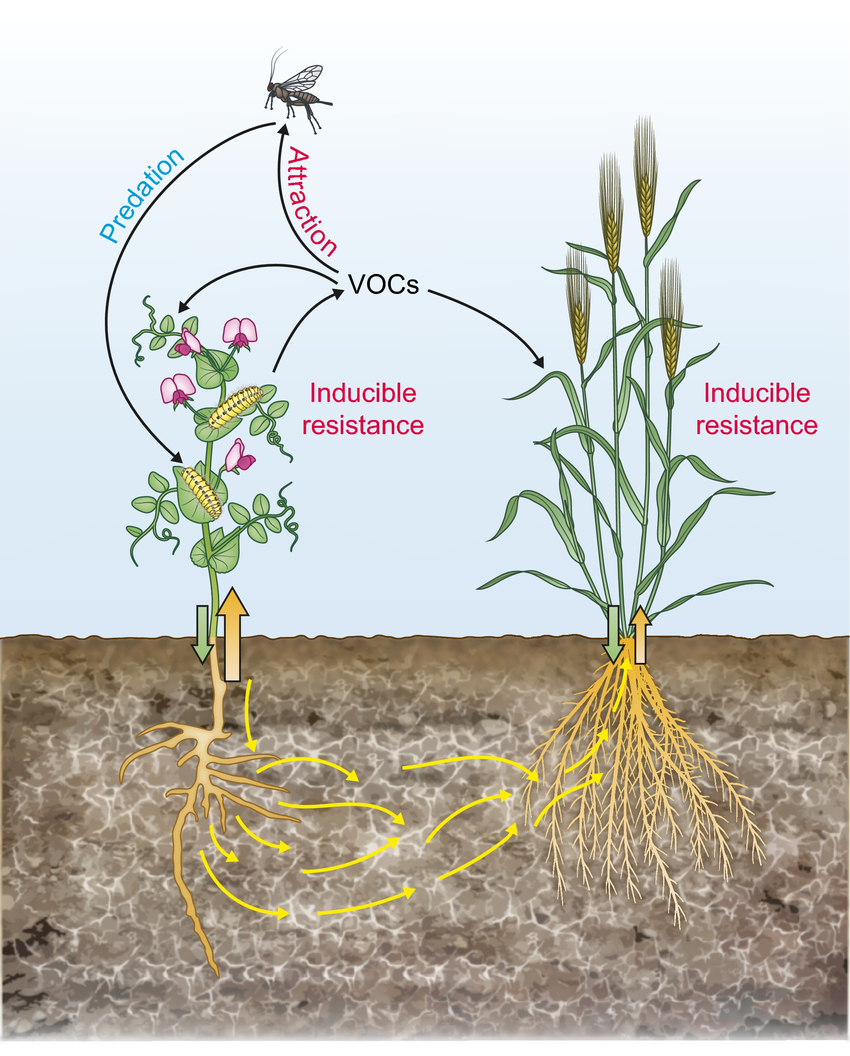
Phytoremediation offers a promising, nature-based solution. Certain plants—including grasses, trees, and shrubs—can take up contaminants through their roots and either store, transform, or stabilize them. Tall fescue (Festuca arundinacea), for example, is known for its ability to stabilize soil structure while absorbing pollutants. Even more compelling is its symbiotic relationship with mycelium, the underground fungal networks that extend root systems and enhance the breakdown and redistribution of toxins. Together, these living systems form a cooperative network that gradually restores ecological balance to damaged ground.

What fascinates me most is the hidden nature of this process: the cellular-level exchanges between roots, fungi, and soil chemistry. These invisible interactions represent both a scientific strategy for detoxifying landscapes and a metaphor for resilience—quiet systems working in collaboration to heal what has been poisoned and disturbed.

August 10 ( end of first week at residency )

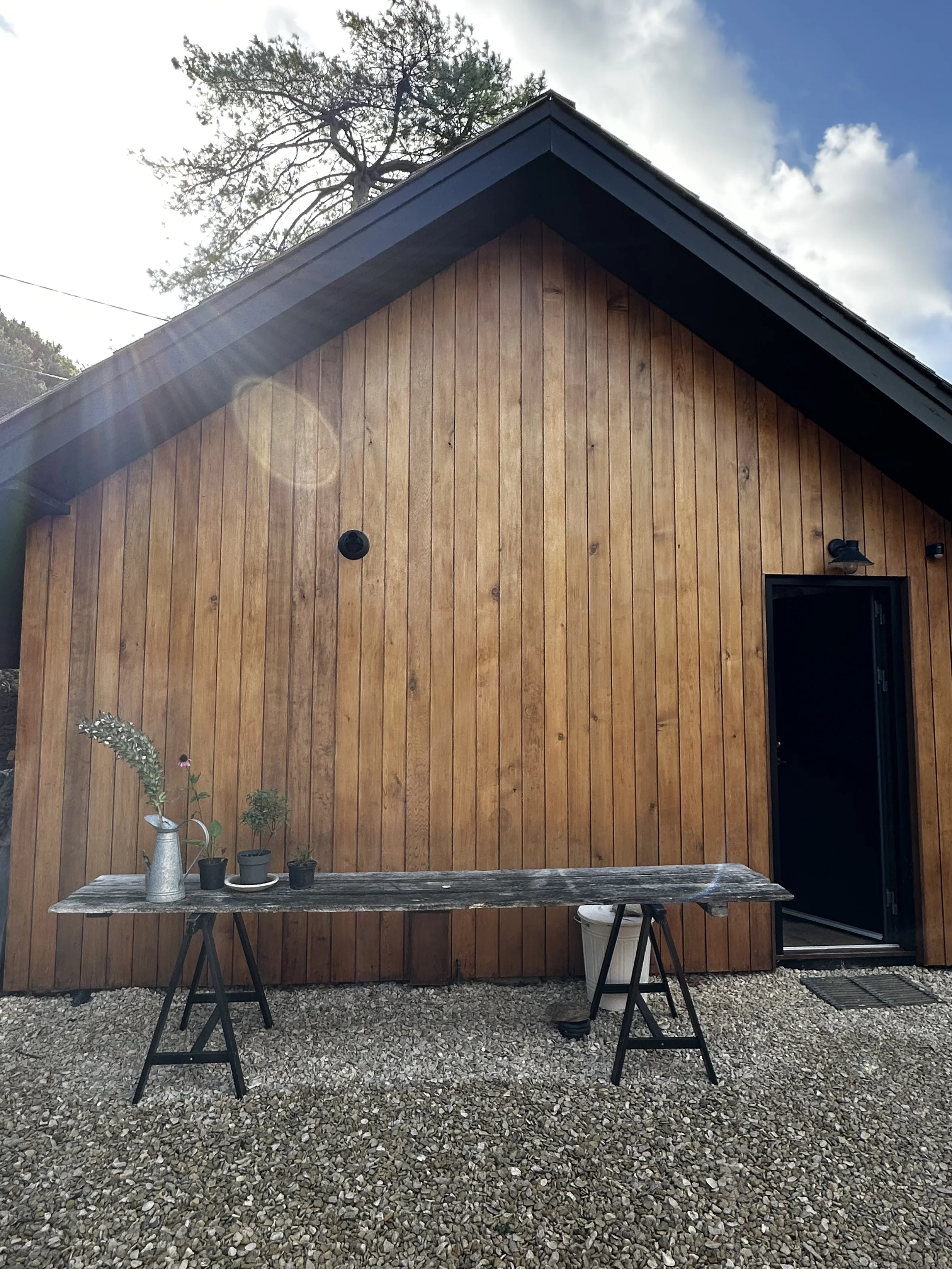
The Hide, artist retreat

August 10, blog

Brilliant warm Sunday, quiet and peaceful as I walk to the village shop. Last night sat in the garden after a barbecue and talked into dark of night. Four Artists bringing worthy discussions, insights, humour and information to the table. 

This morning invited to look at work of the other resident artist who leaves today. 

Lots of generosity sharing, so important. Hugely grateful.

Moving on with the work three more weeks! Oh joy!

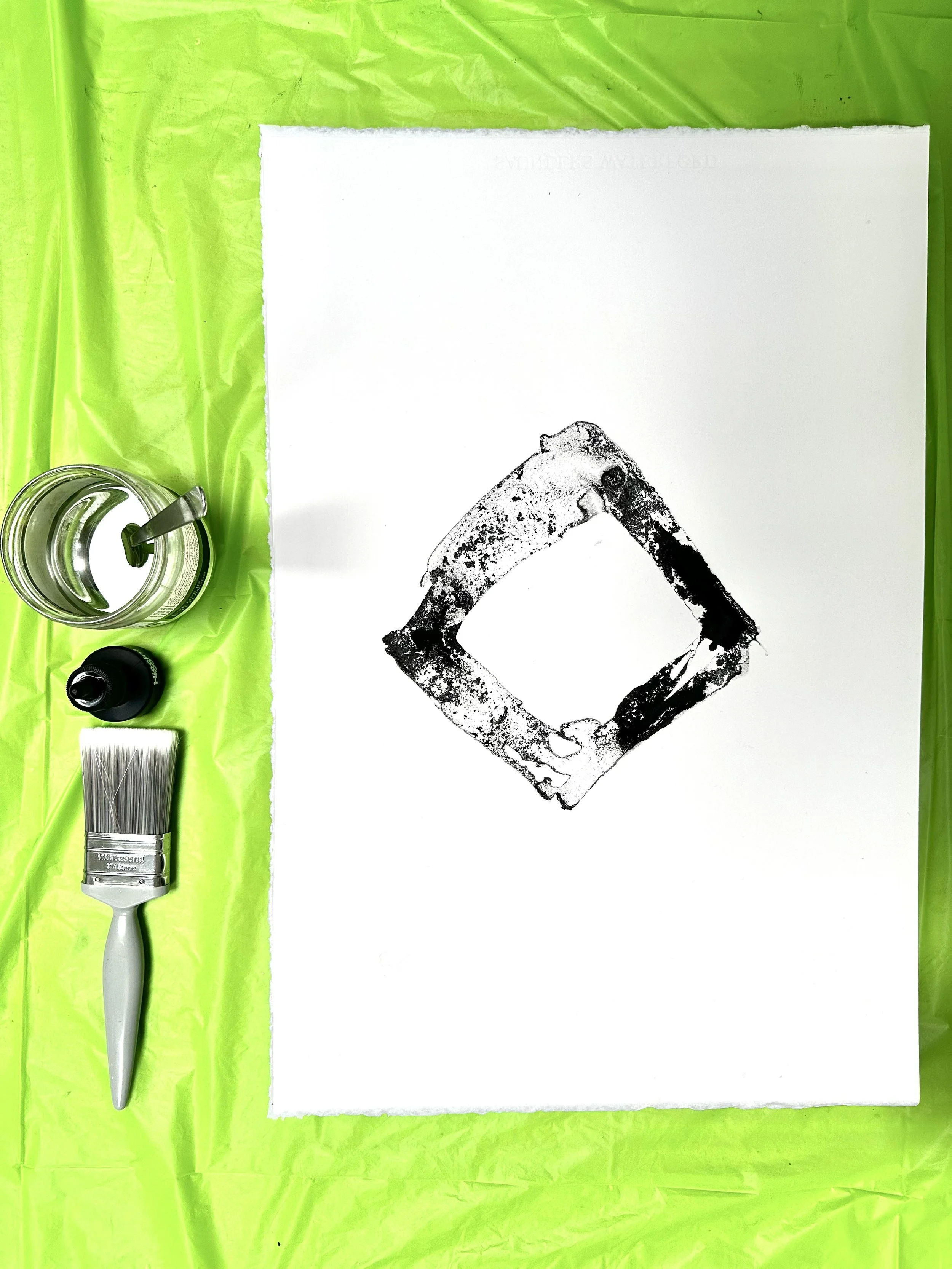
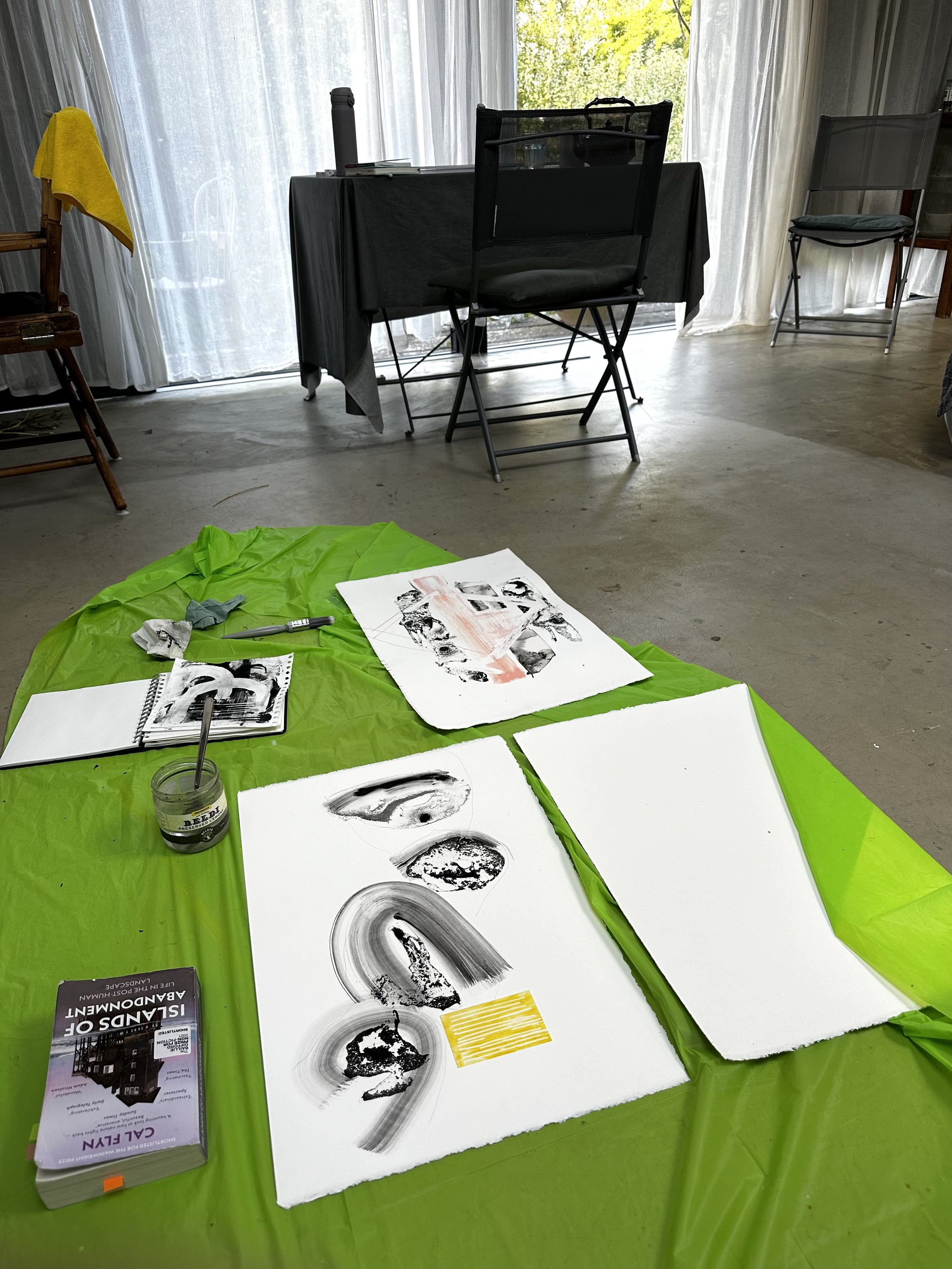
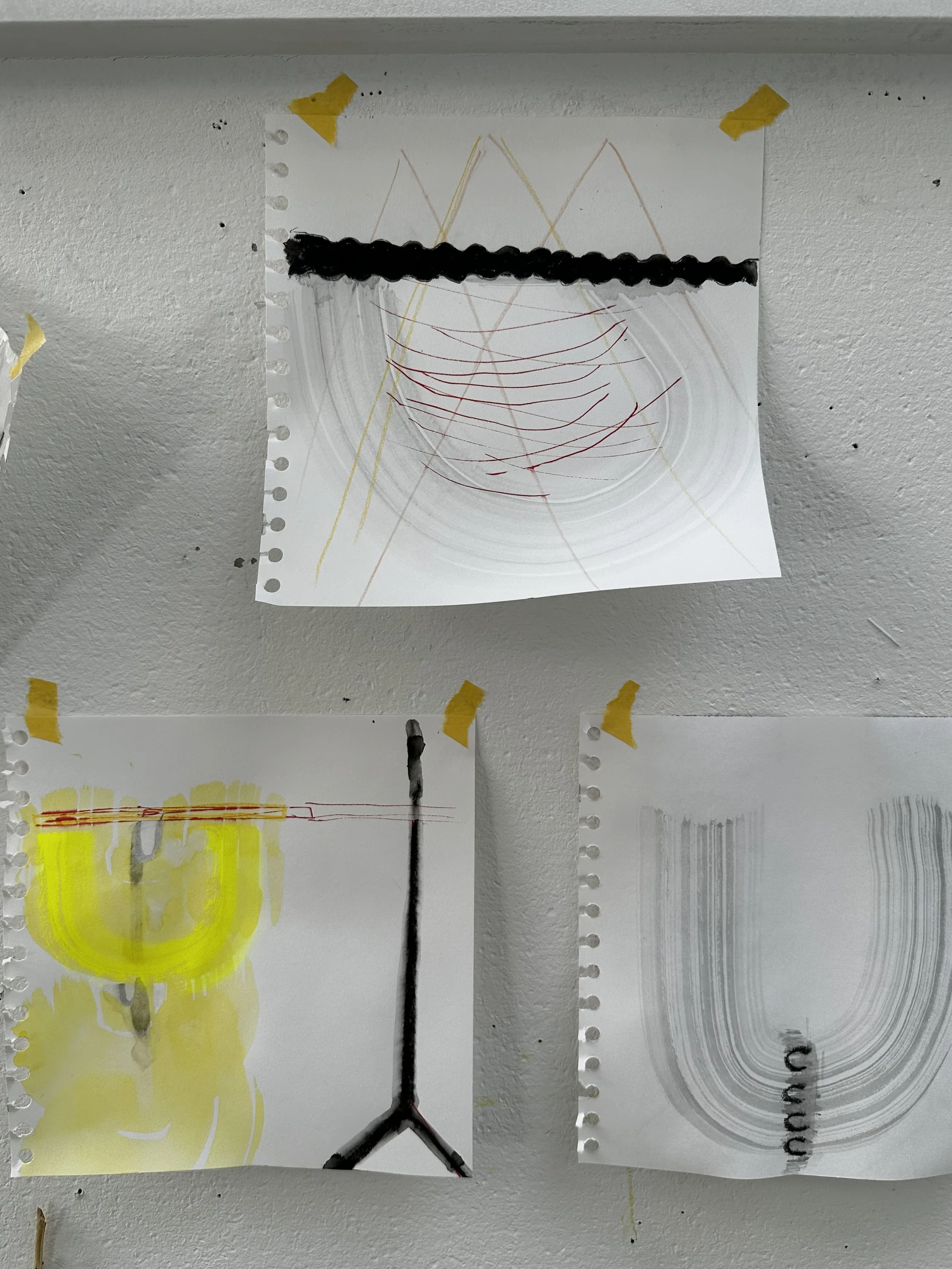
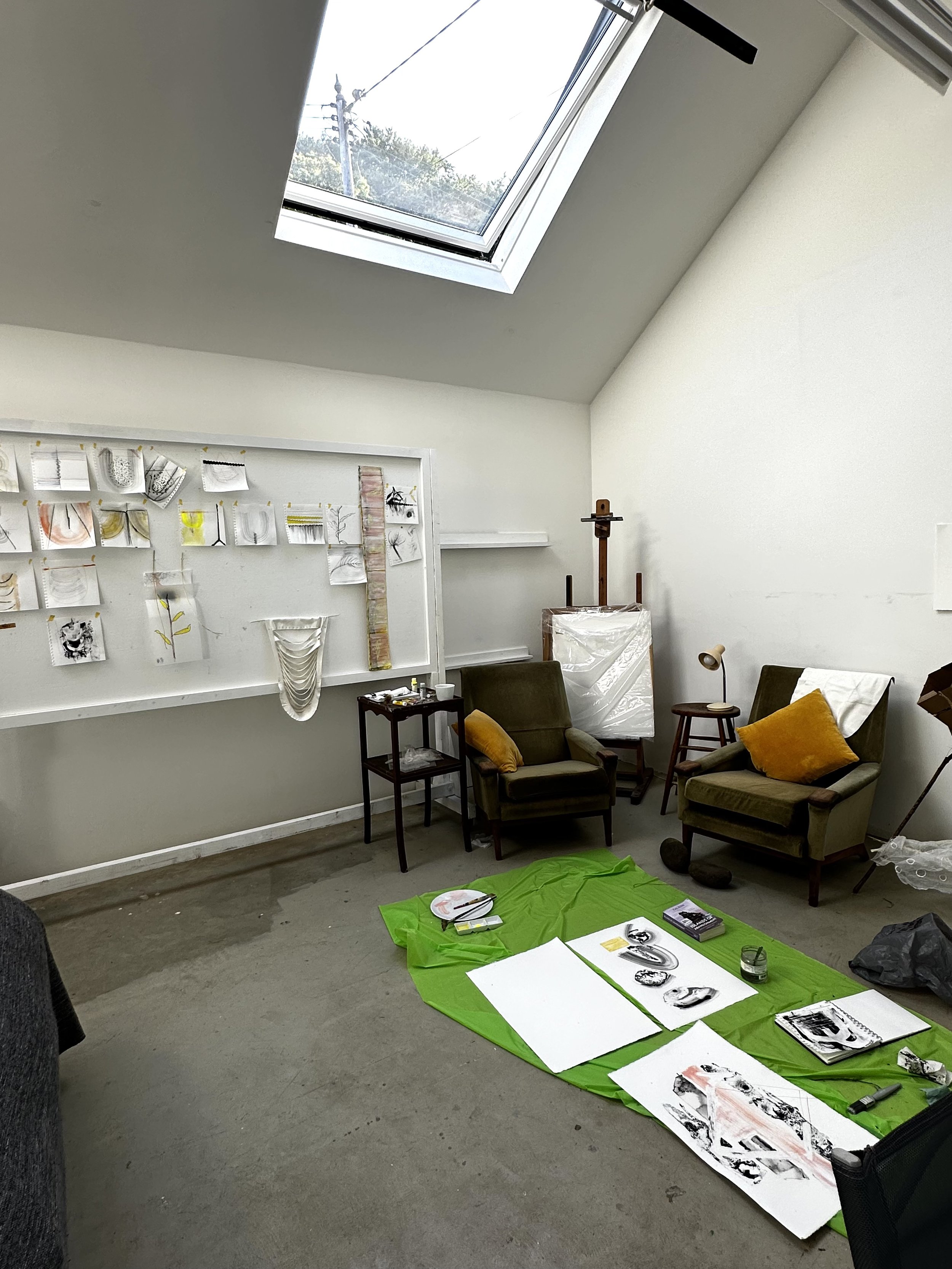
Organising drawings done so far and balancing between urgency, planning and spontaneous action onto surface. While a calm energy and stillness has a part to play, there are questions to ask of the work.

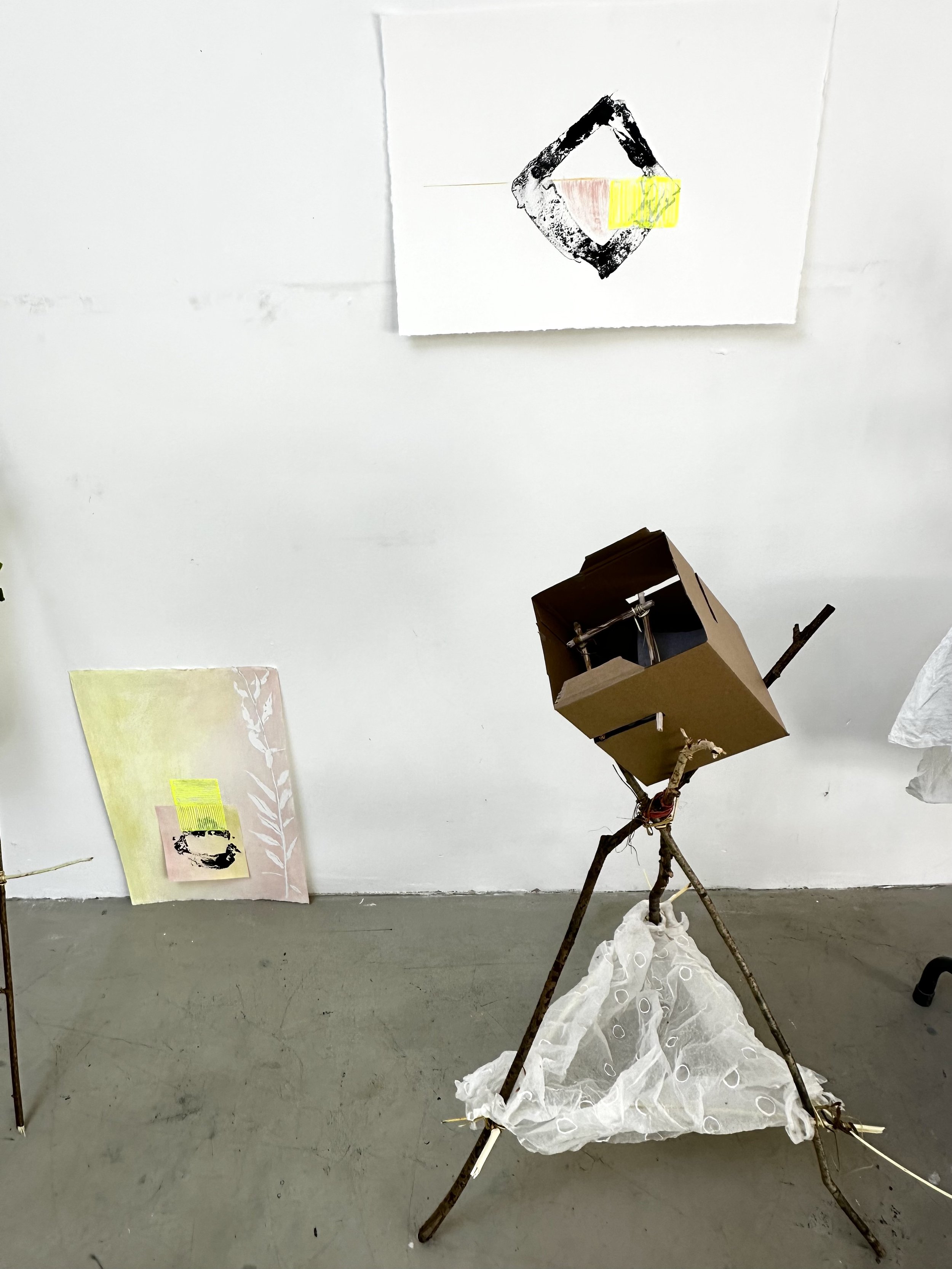
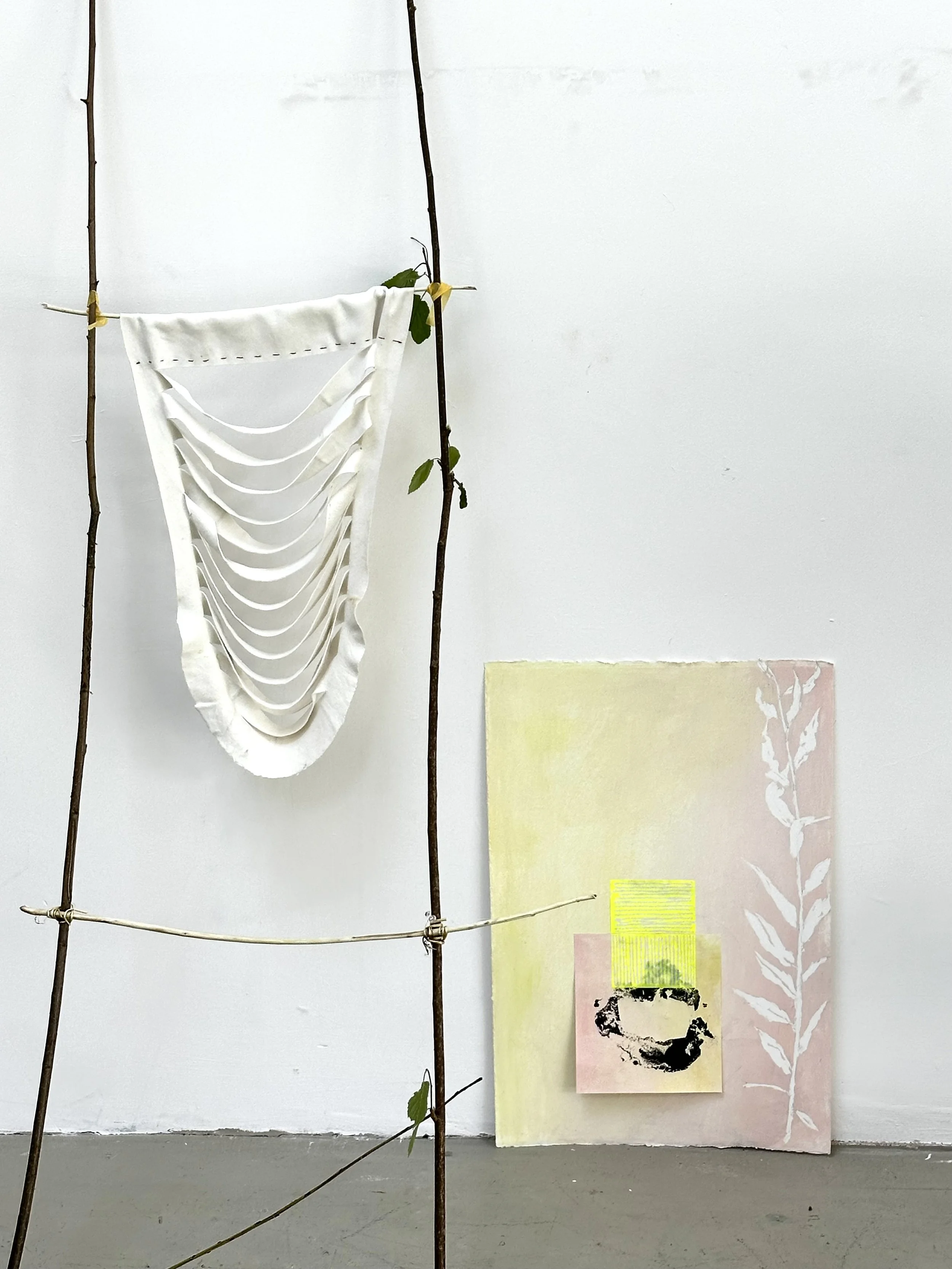
 While pursuing the ideas of phytoremediation, plants that detoxify soils on abandoned quarry sites, mining sites, industrial wastelands, I discover that Willow, which grows in the lane by me, is a good plant/ tree for breaking down arsenic and other toxins in the soil. The great thing is the more you prune it the more it grows back. As in basket making branches of various thickness can be cut and used in my artwork as linear “ drawing”as I work with this plant. 

Alice coming this afternoon for a input talk about my work in general and this work I’ve done so far.


* Artist Residency in Gloucestershire: Drawing, Willow, and Limestone *

Art Practice Rooted in Landscape and Geology

The Hide
August 9, 2025

This year has unfolded with an incredible energy—community-focused, creatively rich, and full of meaningful connections in London. Now I’ve landed in Nailsworth, Gloucestershire, for my residency, and something quieter, deeper is beginning to take root.

Being here feels like an alignment. I’m grateful—aware that these windows of creative focus and environmental immersion are rare. And with that gratitude comes a subtle pressure: to honour the support I’ve received, the interest in my work, and my own need to feel genuinely engaged. The work must come from a place of truth and curiosity, not just productivity.

My residencies tend to begin with a kind of unraveling—mental noise dissolves, intuition steps forward. I arrived with proposals, research, and ideas, including a deep dive into the geology and quarrying history of the area. That remains a thread. But I’ve shelved it, for now, in favour of something more immediate, more bodily.

One morning, I found myself pruning the tangled willow bush just outside the studio door. Without much forethought, I began shaping a primitive structure—using low-tech, ancient methods from basketry to bind and bend the material. It felt honest. Responsive. The beginnings of something sculptural emerging from a quiet encounter with place.

What matters most to me right now is drawing. It’s the foundation—deciding whether a form wants to remain on paper, translate into painting, or take on dimensionality. I’ve been hesitant to explore three-dimensional work more fully due to the logistics of moving, storage, and shipping. But here, with space and time, I’m allowing that interest to unfold again—photographing, experimenting, and letting the process spill outward.

The environment is impossibly beautiful—steep, layered hills, dense woodlands, dry-stone walls, and homes built from the honey-coloured oolite limestone quarried below. Drawing here is becoming a kind of mapping. Not just of landscape, but of structure, body, and memory. Stone as material and metaphor. Home as a concept embedded in the cloth trade, the architecture, and the geology—solid foundations rising from deep time.

This place is a counterpoint to the urgency and density of London. Here, time bends. I walk past hedgerows, forage blackberries, trace footpaths, watch the light shift across the valley. The silence isn't empty—it’s textured. And in that stillness, my inner voice grows more audible, more certain.

In next week’s blog, I’ll begin to unpack how these threads are weaving together—drawing, material, place, and gesture.

New series Rewilding

This series, motivated by a continuing interest in geology, is about restoration of abandoned mining and quarry industries.

I recently walked through a nature reserve, in the hills of the Mendips in SW. England, the ghost site of a post-industrial lead smelting mining operation, a toxic & historic relic of the industrial revolution.
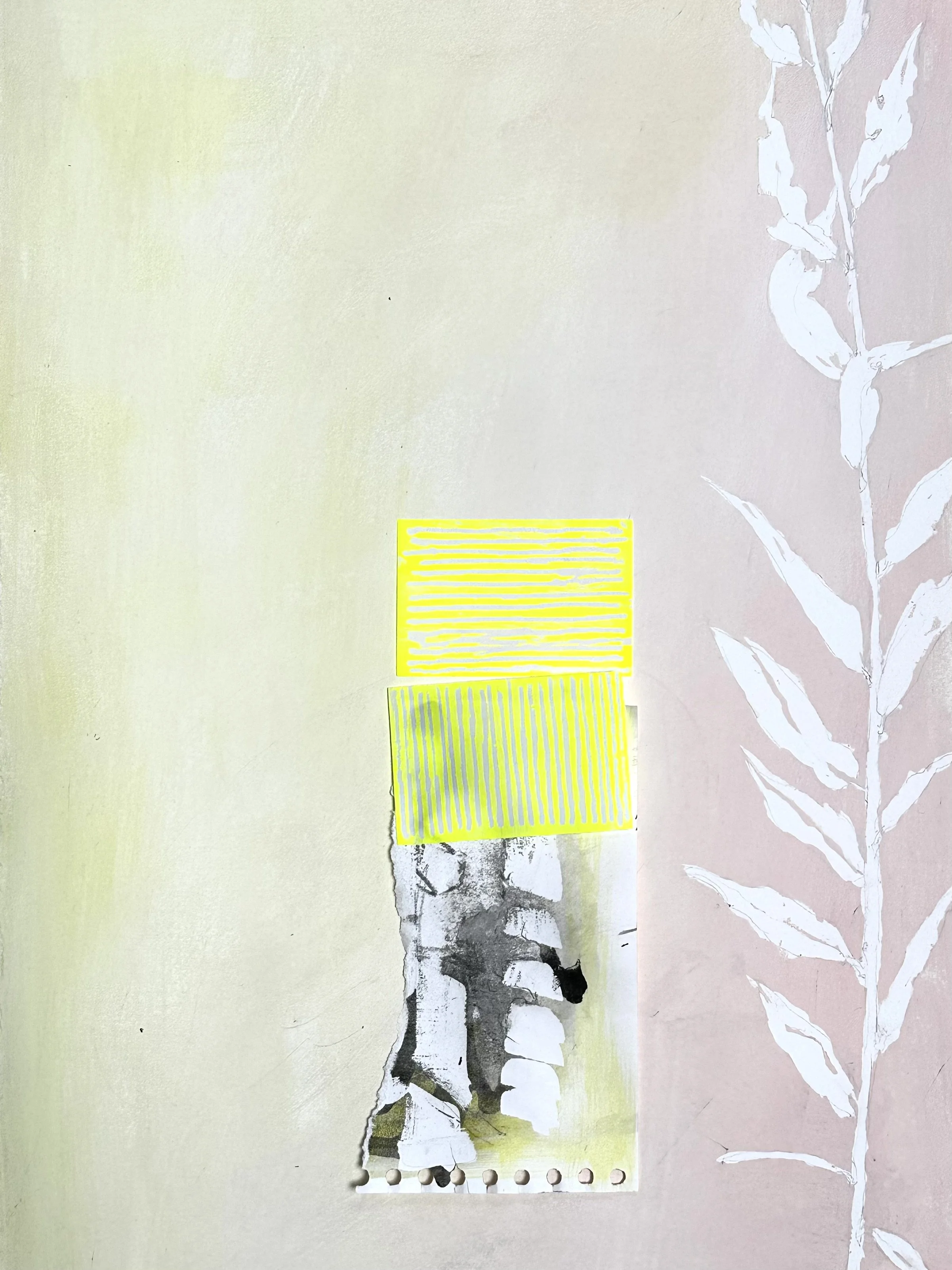
 These scarred, toxic landscapes—once defined by heavy extraction—are now slowly being overtaken by resilient native plant life. Through layered compositions, I explore how vegetation intervenes in these spaces, creating unexpected pockets of biodiversity and new ecological narratives. My work investigates this slow transformation, supportive of  conservation over the contemporary fixation on innovation.

Using remnants of industrial ruin as both material and metaphor to reflect on cycles of damage, recovery, and the quiet force of rewilding, these paintings and other works serve as contemplations on how nature reclaims and redefines spaces and places once shaped by exploitation.